
Tracing Tyler County Former Owners
The trail starts with the latest deed. Tyler County ownership then moves backward through grantor and grantee pairs. The online index spans deed, older-series, plat, tax, fiduciary, lien, and release books. No start year is displayed, though. The table keeps that limit visible rather than guessing a date for the county's records.
| Source | Years It Covers | Where Held | What It Shows |
|---|---|---|---|
| County Clerk IDX | Start year not displayed | Online index | Names, instruments, descriptions, cross references, notes |
| Older Series Deeds and deed books | Year ranges not published | County Clerk | Earlier transfers and deed references |
| Plats and tax maps | Individual map dates shown | Clerk / state map archive | Lot labels and map context |
| Library local-history material | Collection years not enumerated | Tyler County Public Library | Possible newspaper, directory, or obituary leads |
Pull the parties from the current deed. Its legal description anchors every later step. Work the online era through the IDX. For earlier years, ask the Clerk for Older Series Deeds or the right deed book, since the office publishes no microfilm or date spans. A plat or tax map can match an old lot description, but it never replaces the deed chain itself.
Walking Back Through Tyler County Deeds
Every step in a Tyler County deed chain uses the last grantee to locate the next earlier instrument. A grantor transfers the interest. A grantee receives it. The Clerk's IDX offers Grantor and Grantee searches plus Direct and Reverse roles. Notes matter here. Record the book group and legal description at each step, because a common surname can drag the search onto a different parcel entirely.
- Find the latest deed that matches the property and note its grantee and legal description.
- Use the grantor on that instrument as the next name to trace backward.
- Search that prior party as a grantee and compare the description and cross references.
- When no earlier online entry appears, ask the Clerk for the older book group and date range.
- Grantor / grantee
- The transferring party and the party receiving the stated interest.
- Chain of title
- The linked sequence of recorded transfers for the same property.
- Legal description
- The land description used to match old and current instruments.
Tyler County's Index Has No Cutoff Year
The Clerk's online search offers From and Thru date fields. January 1900 once appeared as the first date. That display proves little. It does not confirm that Tyler County deed images reach back to 1900. The same goes for index entries. The portal publishes no verified online start year. It lists no image cutoff and no separate vault range.
When former owners vanish from online results, ask the Clerk about the gap. The cause may be spelling, book type, date range, or the edge of online coverage. Save the newest instrument's book reference. Save its legal description too. The County Clerk, not the date picker, is the authoritative source. That office holds the earliest available volume.
Older Tyler County Deed Books
The IDX book menu reads like a map of Tyler County's recordkeeping. It lists Older Series Deeds, Deed Book, Plat Book, Real Estate Tax Book, Reassessment Land Book, Release Book, Trustee Book, and delinquent or nonentered land volumes. The names help you ask a precise question. They do not supply each series' years. No microfilm collection is confirmed either, so contact the Clerk before planning any film search.
For an in-person request, bring the current deed, party names, and legal description. Ask which earlier book holds the grantor-grantee entry. Ask whether the office can produce a plain or certified copy. The office posts no copy fee schedule. The county Clerk page lists mailing and recording instructions. The older-volume process should be confirmed directly.
Tyler County Estate Transfers
An ownership chain sometimes runs through an estate instead of an ordinary sale. Wills and fiduciary appointments are recorded by the Tyler County Clerk. The IDX lists instruments such as Affidavit of Heirship, Transfer on Death, Will Order, Small Estate Affidavit, and Record of Fiduciary. Trace the estate name forward to the deed or transfer instrument that follows it. Then match the property description to the parcel.
Estate files solve a common puzzle. A grantor's name never connects to a warranty deed. That grantor often transferred title through probate instead. County instructions request a certified death certificate or obituary. They also request the original will or codicil, the decedent's Social Security number, and heir names and addresses. Applicants are asked to arrive before 3 p.m. and to call 304-758-4104. The usual representative qualification fee runs $50 to $70.
Older Tyler County Place Names
A past-owner search can fail on today's address alone. Tyler County deeds describe rural land by district and parcel. They may use an older road name, a lot and block, or metes and bounds. The Clerk's Description and Cross References columns connect a modern entry to the earlier wording. Sistersville adds riverfront and industrial names as clues.
The state tax-map archive offers a useful convention, shown in its Meade example. Parcel and index numbers sit in circles. Deed lot numbers sit in parentheses. That distinction helps compare a map with an instrument. It creates no new historical owner, though. Search the recorded plat or deed. Confirm the exact name and land description before adding anyone to a chain.
Keep separate notes for transfers and for other recorded events. A mortgage, lien, release, right-of-way, or lis pendens can explain a gap. It can also affect the parcel. Its party is not automatically a former owner. Follow the grantor-grantee sequence for the land. Use the other book groups as cross-checks. When two people share a name, four details keep you from joining the wrong property history. The legal description, district, date, and reference settle it.
Middlebourne's Tyler County Record History
Middlebourne keeps its county-seat history close. The National Register courthouse record marks 1854, 1874, and 1922 as significant years. Those dates matter for the Tyler County Courthouse and Jail. That history still shapes how deed records are organized today. The Clerk's index points to historic book groups. The county's records offices have since moved to 350 Park Avenue.
The Tyler County Public Library sits at Main and Broad Streets in Middlebourne. Its first home opened in 1967 inside a Civil War-era house. The collection grew from there. The state directory does not list which newspaper, city-directory, or obituary holdings the library keeps. It says nothing about how far back they run. Ask the staff directly before treating a secondary clue as a recorded transfer.
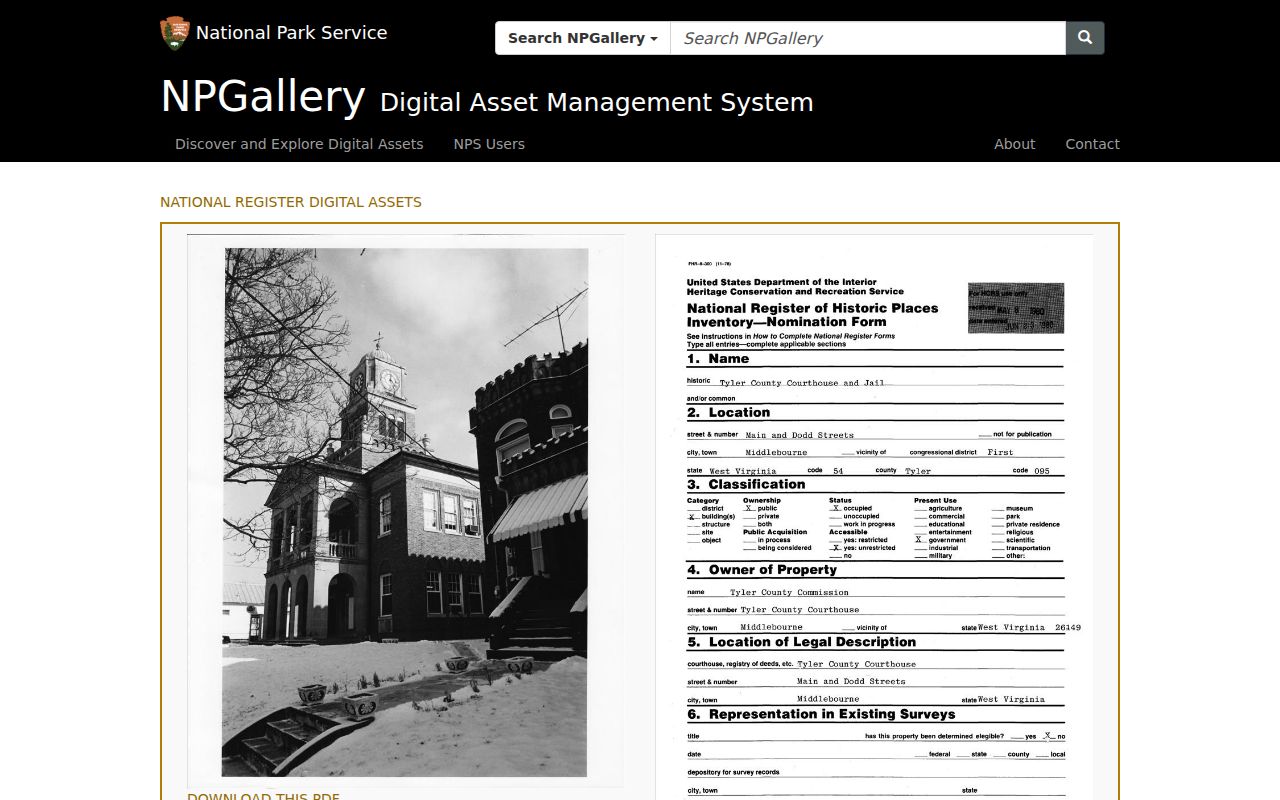
The historic site is context, not evidence. It frames Tyler County's older deed and estate books without proving any parcel's chain of title.
Tyler County Mineral Chains Split
Former owners of surface land may not be former owners of its minerals. In Tyler County, the Assessor notes that older mineral severances often lack any link to the surface parcel in the mapping system. The Clerk's index holds oil-and-gas recordings, leases, assignments, and cancellations. Those instruments can form a chain of their own.
When the question is oil, gas, or production, follow the legal description in the mineral instruments instead of assuming a surface deed carried everything beneath it. Record the dates and parties in that second chain. Ask the Clerk about older books if the online index shows no prior entry. A modern parcel map cannot close a title gap.
How Far Back Tyler County Records Reach
The Tyler County Clerk's portal does not state the earliest year available online. No first surviving deed book is established either. Hold off on saying a chain reaches any particular year until the Clerk confirms the book and index coverage. The courthouse history itself is documented. Tyler County has no recorded courthouse fire or digitization cutover to point to.
Lawful use. Former-owner research in Tyler County supports house history, title review, estate work, and property diligence. Do not use a name or address from the record trail to track, harass, or harm a living person.